
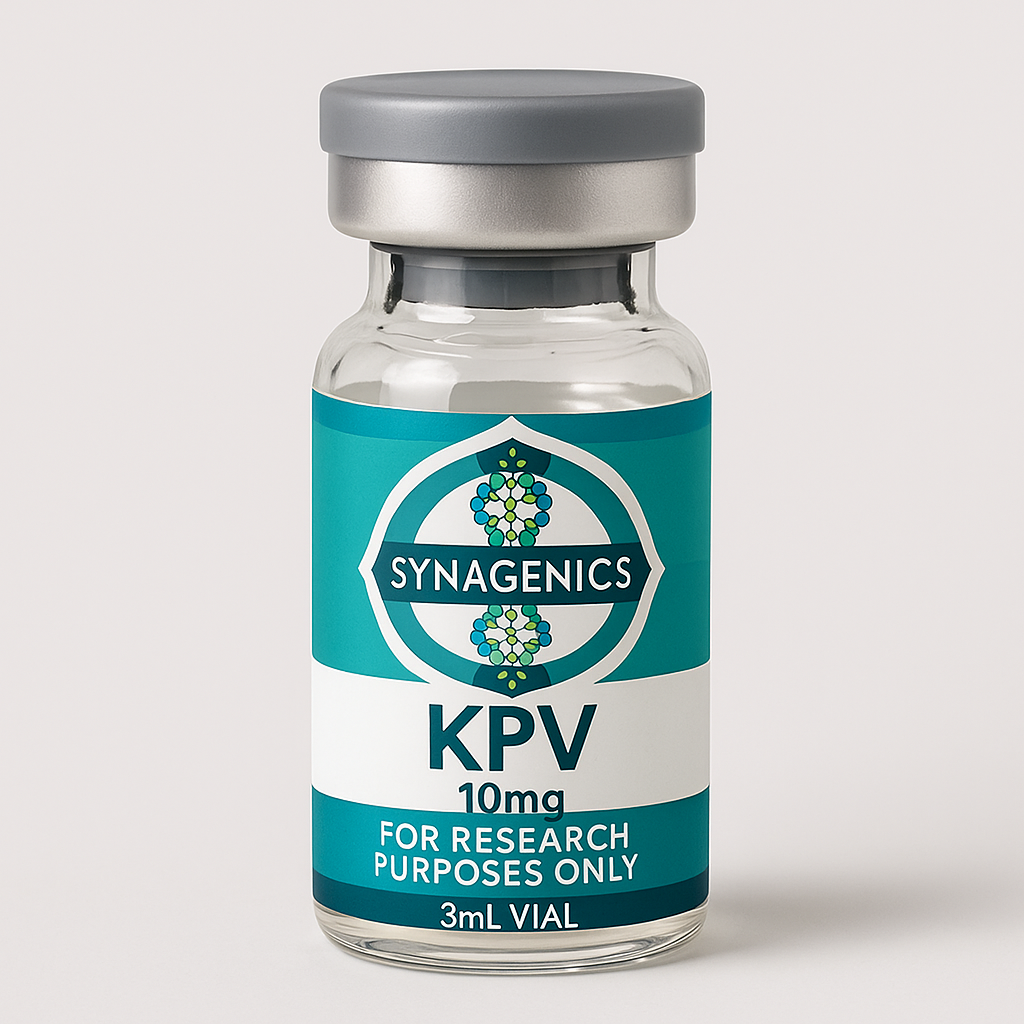
KPV | ≥99% HPLC Verified | Synagenics
KPV (Lys-Pro-Val) is a short tripeptide fragment derived from the C-terminal region of α-melanocyte stimulating hormone (α-MSH). In laboratory research, this peptide has been investigated for its interactions with melanocortin signaling pathways and intracellular inflammatory signaling cascades. Synagenics KPV is analytically verified through third-party testing and supplied with batch-specific certificates of analysis to support laboratory verification and research documentation. Researchers exploring additional compounds may browse the Synagenics research peptide catalog.
Peer-reviewed literature examining peptide signaling pathways, receptor interactions, and inflammatory pathway regulation continues to expand across experimental models. Researchers studying compounds such as KPV frequently reference indexed literature available through PubMed and broader academic databases when evaluating melanocortin receptor signaling and intracellular inflammatory pathway modulation. Synagenics supports these experimental frameworks by providing analytically verified research peptides accompanied by batch-specific documentation to assist with laboratory verification and reproducibility.
KPV Research Mechanism
KPV has been investigated in experimental research models involving melanocortin receptor signaling and intracellular inflammatory pathway regulation. Studies examining α-MSH–derived peptide fragments suggest that KPV interacts with melanocortin receptors including MC1R and MC3R, initiating signaling cascades associated with cyclic AMP (cAMP) activity and downstream transcription factors.
Research published in Peptides examining cytokine signaling responses in macrophage models — PubMed PMID: 15829536 documented the peptide’s interactions with inflammatory signaling pathways including tumor necrosis factor-α and interleukin signaling cascades in laboratory cell models.
Additional investigations have examined KPV’s ability to interact with intracellular NF-κB signaling pathways following cellular membrane penetration. Studies reported in Journal of Pharmacology and Experimental Therapeutics examining intracellular pathway modulation — PubMed PMID: 17498888 evaluated the peptide’s ability to influence nuclear transcription activity within experimental inflammatory models.
Researchers reviewing broader indexed literature may explore KPV peptide research on Google Scholar for studies involving melanocortin signaling, intracellular inflammatory regulation, and peptide pathway interactions.
Research Applications
Preclinical research commonly evaluates KPV in experimental frameworks involving inflammatory signaling pathways, immune system signaling responses, and antimicrobial peptide activity. Investigators often examine the peptide in cell culture models evaluating cytokine expression patterns, receptor signaling responses, and intracellular transcription pathway activity.
Comparative laboratory research may examine KPV alongside related compounds involved in tissue signaling pathways and peptide-mediated repair mechanisms. Investigators studying inflammatory signaling frameworks sometimes evaluate complementary compounds such as the BPC-157 & TB-500 research peptide blend when exploring broader peptide signaling environments.
Research Parameters
Lyophilized KPV is commonly prepared for laboratory research through reconstitution using sterile laboratory solvents such as bacteriostatic water or saline solutions under controlled experimental handling conditions.
Researchers frequently calculate preparation volumes and concentration parameters using the Synagenics peptide reconstitution calculator when planning experimental protocols. Reconstituted solutions are generally maintained under refrigerated laboratory storage conditions to support short-term peptide stability within research environments.
Synagenics Quality Verification
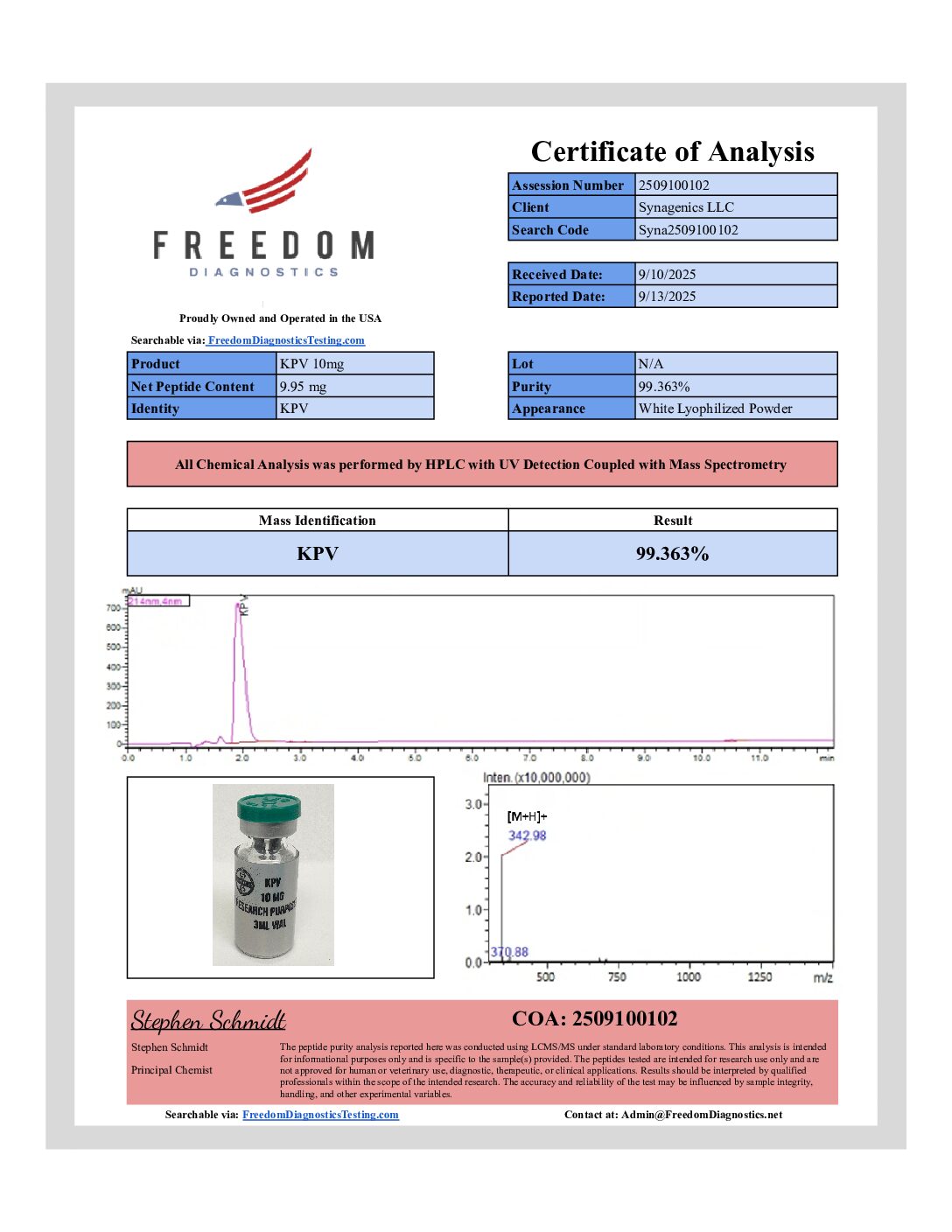
✓ Batch-Specific Certificate of Analysis — Every Order
✓ Mass Spectrometry Confirmed
✓ Independent Analytical Verification Available
Synagenics research peptides undergo independent analytical verification to confirm peptide identity, purity standards, and structural integrity. Each batch includes laboratory documentation supporting quality verification and research recordkeeping.
Why Researchers Choose Synagenics KPV
Synagenics provides analytically verified research peptides designed to support experimental frameworks involving receptor signaling studies, peptide pathway analysis, and molecular characterization. Each batch is accompanied by documentation supporting reproducibility within laboratory environments.
Why Researchers Choose Synagenics:
→ Batch-specific COAs — not generic reports
→ Independent analytical verification
→ ≥99% HPLC purity standards
→ Research documentation with every batch
→ Laboratory research support resources available
Researchers may also review peptide research articles and educational resources available through the Synagenics Blog Hub.
Frequently Asked Questions
What is KPV?
KPV is a short tripeptide fragment derived from α-melanocyte stimulating hormone. Laboratory research commonly examines the peptide in experimental models involving melanocortin receptor signaling and inflammatory pathway interactions.
What purity standard does Synagenics KPV meet?
Synagenics KPV is independently verified through third-party HPLC analysis at ≥98% purity, with batch-specific certificates of analysis provided for laboratory documentation.
How is KPV prepared for laboratory research?
Laboratory preparation commonly involves reconstitution of the lyophilized peptide using sterile laboratory solvents under controlled experimental conditions. Researchers may calculate preparation volumes using the Synagenics reconstitution calculator.
What research areas commonly examine KPV?
KPV is frequently studied in experimental models examining melanocortin receptor signaling, inflammatory pathway modulation, and antimicrobial peptide activity.
How should KPV be stored for research use?
Lyophilized KPV is typically maintained in cold laboratory storage conditions to preserve peptide stability. Following preparation, reconstituted solutions are commonly stored under refrigerated laboratory environments for short-term experimental use.
Does Synagenics provide documentation with KPV orders?
Yes. Each batch includes analytical documentation such as a batch-specific certificate of analysis to support laboratory verification and research recordkeeping.
Research Use Only Disclaimer: For research purposes only. Not for human consumption. These statements have not been evaluated by the FDA. This product is not intended to diagnose, treat, cure, or prevent any disease.


Reviews
There are no reviews yet