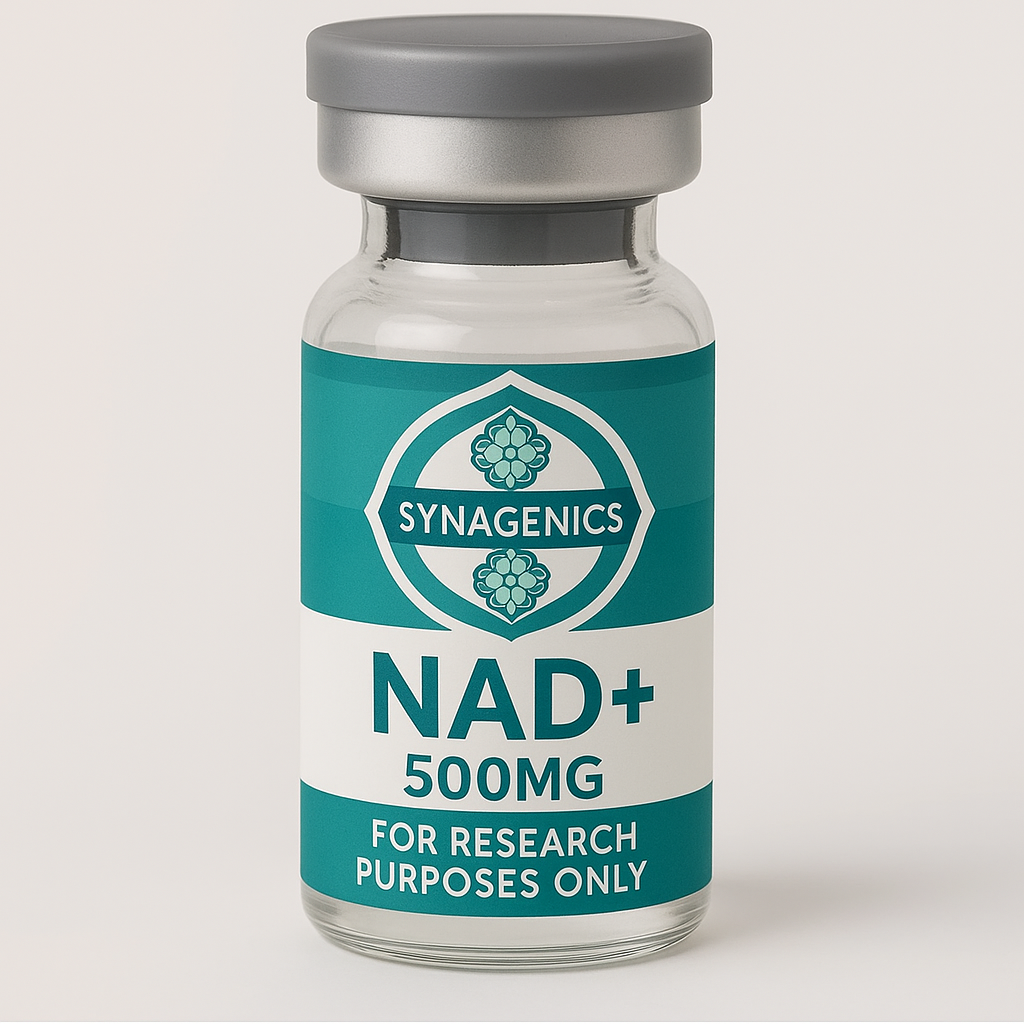
NAD+ Research Compound | ≥99% HPLC Verified | Synagenics
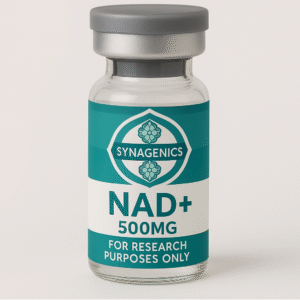
NAD+ (nicotinamide adenine dinucleotide) is a coenzyme widely studied in laboratory research involving cellular bioenergetics, metabolic signaling pathways, and redox-related biochemical processes. NAD+ participates in numerous enzymatic reactions that regulate energy metabolism, molecular repair systems, and cellular signaling networks. Scientific literature examining NAD+ metabolic pathways is documented in peer-reviewed research analyzing NAD+ metabolism and cellular aging pathways — PubMed PMID: 27811958.
NAD+ Research Mechanism
NAD+ functions as an essential cofactor within multiple biochemical pathways that regulate cellular energy transfer and metabolic signaling. In laboratory research environments, NAD+ participates in oxidation-reduction reactions that support ATP generation and mitochondrial energy metabolism.
Experimental studies also examine NAD+ as a substrate for poly(ADP-ribose) polymerase (PARP) enzymes involved in DNA repair signaling pathways. Research analyzing this mechanism is described in literature investigating NAD+ involvement in DNA repair and cellular stress response — PubMed PMID: 29514064. Researchers exploring broader scientific literature may review Google Scholar research on NAD+ cellular bioenergetics and signaling for additional experimental findings.
Research Applications
NAD+ is frequently examined in laboratory studies involving cellular energy metabolism, mitochondrial signaling pathways, and enzymatic regulatory systems. Research models often analyze how NAD+ availability influences metabolic signaling networks and cellular biochemical activity.
Comparative experimental studies may evaluate NAD+ alongside related research compounds such as MOTS-C, which is studied for mitochondrial signaling pathways, and 5-Amino-1MQ, which is examined in metabolic enzyme pathway research.
Research Parameters
Laboratory preparation protocols commonly involve controlled reconstitution using sterile research materials appropriate for peptide handling. Researchers frequently reference the Synagenics peptide reconstitution calculator when estimating preparation volumes and concentration ranges for experimental planning.
Lyophilized NAD+ materials are typically maintained under refrigerated or frozen laboratory storage conditions prior to preparation in order to preserve structural stability. Following reconstitution, controlled temperature storage and protected laboratory handling procedures are generally used to support short-term experimental consistency.
Synagenics Quality Verification
✓ Batch-Specific Certificate of Analysis — Every Order
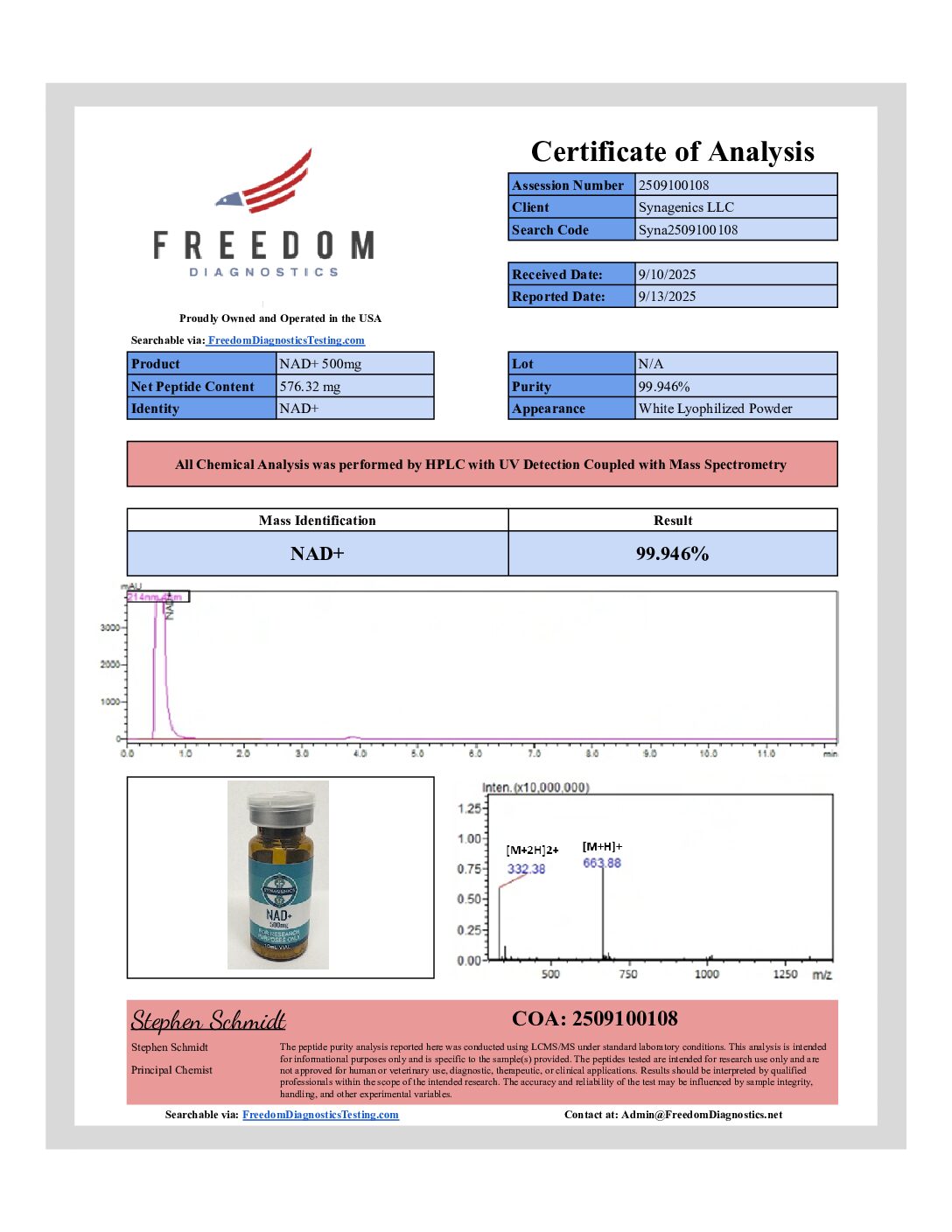
✓ Mass Spectrometry Confirmed
✓ Independent Analytical Verification Available
Why Researchers Choose Synagenics NAD+
Synagenics NAD+ undergoes independent analytical verification to confirm compound identity and purity standards. Each batch includes a certificate of analysis supporting laboratory verification and research documentation.
Researchers designing comparative cellular research studies may also examine antioxidant systems such as Glutathione, which is frequently studied in experimental models involving redox signaling and cellular antioxidant pathways.
Why Researchers Choose Synagenics:
→ Batch-specific COAs — not generic lab reports
→ Independent analytical verification
→ ≥99% HPLC purity standards
→ Fast order processing
→ Research support resources available
Frequently Asked Questions
What is NAD+ used for in research?
NAD+ is commonly studied in laboratory models examining cellular bioenergetics, metabolic signaling pathways, mitochondrial activity, and enzymatic redox systems.
How is NAD+ typically studied?
NAD+ is frequently analyzed in experimental systems investigating cellular energy metabolism, enzyme-dependent biochemical reactions, and mitochondrial signaling behavior.
What makes Synagenics NAD+ suitable for research applications?
Synagenics NAD+ is verified through third-party HPLC analysis with mass spectrometry confirmation and batch-specific certificates of analysis supporting laboratory verification and research documentation.
Where can researchers find additional Synagenics compounds and tools?
Researchers can review additional laboratory compounds through the Synagenics shop catalog and use the reconstitution calculator when planning laboratory preparation conditions.
Research Use Only Disclaimer: For research purposes only. Not for human consumption. These statements have not been evaluated by the FDA. This product is not intended to diagnose, treat, cure, or prevent any disease.