
SYN-3R stability is a central consideration in laboratory research involving peptide-based receptor signaling models. Because peptides are composed of amino acid chains connected by peptide bonds, they are susceptible to environmental influences such as moisture, temperature variation, pH shifts, and enzymatic degradation. Maintaining structural integrity is essential for reproducible experimental outcomes.
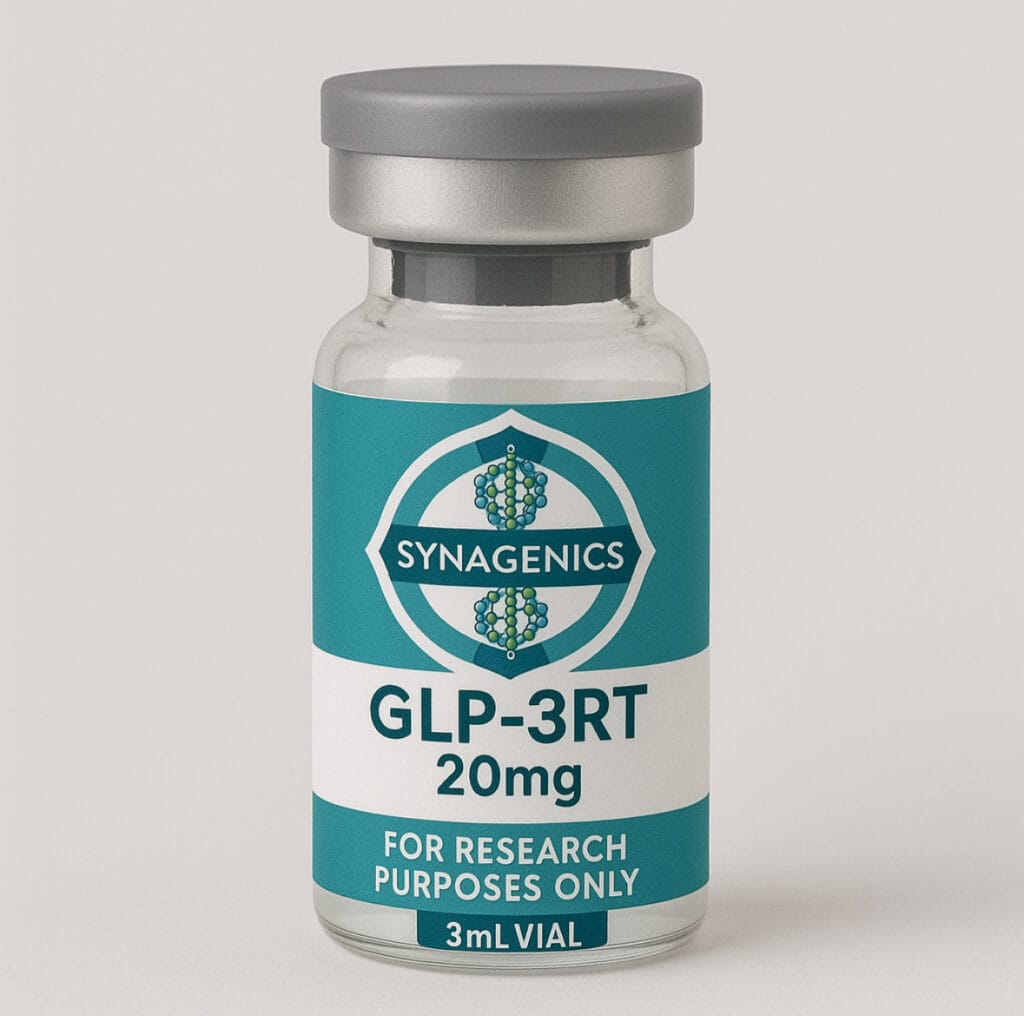
SYN-3R research peptide is typically supplied in lyophilized form to enhance long-term stability under controlled laboratory storage conditions. This page provides a detailed overview of SYN-3R stability characteristics, degradation pathways, lyophilization principles, and high-level laboratory handling considerations relevant to research environments.
What Is SYN-3R Stability?
SYN-3R stability refers to the ability of the peptide to maintain its structural integrity, molecular identity, and functional conformation under defined storage and laboratory conditions.
Peptide stability is influenced by:
- Amino acid sequence composition
- Secondary structural tendencies
- Moisture exposure
- Temperature fluctuations
- Oxidative conditions
- Light exposure
In research settings, structural degradation may alter receptor-binding characteristics or signaling readouts. Therefore, controlled storage and validated handling procedures are fundamental in peptide-based experimentation.
Scientific literature describing peptide stability mechanisms can be accessed through:
PubMed: https://pubmed.ncbi.nlm.nih.gov
Google Scholar: https://scholar.google.com
Peptide Degradation Pathways
Peptides may undergo degradation through several mechanisms, including:
Hydrolysis
Moisture can promote cleavage of peptide bonds, especially under elevated temperature conditions.
Oxidation
Residues such as methionine or cysteine may be susceptible to oxidative modification when exposed to oxygen or reactive species.
Deamidation
Asparagine and glutamine residues may undergo deamidation under certain pH conditions.
Aggregation
Peptide chains may aggregate if solubility conditions are not optimal.
Adsorption to Surfaces
Peptides may adhere to glass or plastic laboratory containers, reducing effective concentration.
Understanding these degradation pathways supports implementation of preventive handling strategies within laboratory environments.
Lyophilization & Moisture Control
Lyophilization, also known as freeze-drying, is a dehydration process that removes water from peptide material under reduced pressure. This process helps preserve structural stability by minimizing hydrolytic degradation.
Advantages of lyophilized SYN-3R research peptide include:
- Reduced moisture exposure
- Improved long-term storage stability
- Enhanced transport resilience
- Lower risk of hydrolytic cleavage
Lyophilized material typically appears as a uniform powder or cake within a sealed vial. Visual inspection before laboratory preparation helps confirm physical integrity.
For SYN-3R research peptide product information:
https://synagenics.com/shop/syn-3r/
Temperature & Storage Considerations
Temperature significantly influences peptide stability. Elevated temperatures may accelerate:
- Hydrolysis
- Oxidation
- Structural denaturation
- Aggregation
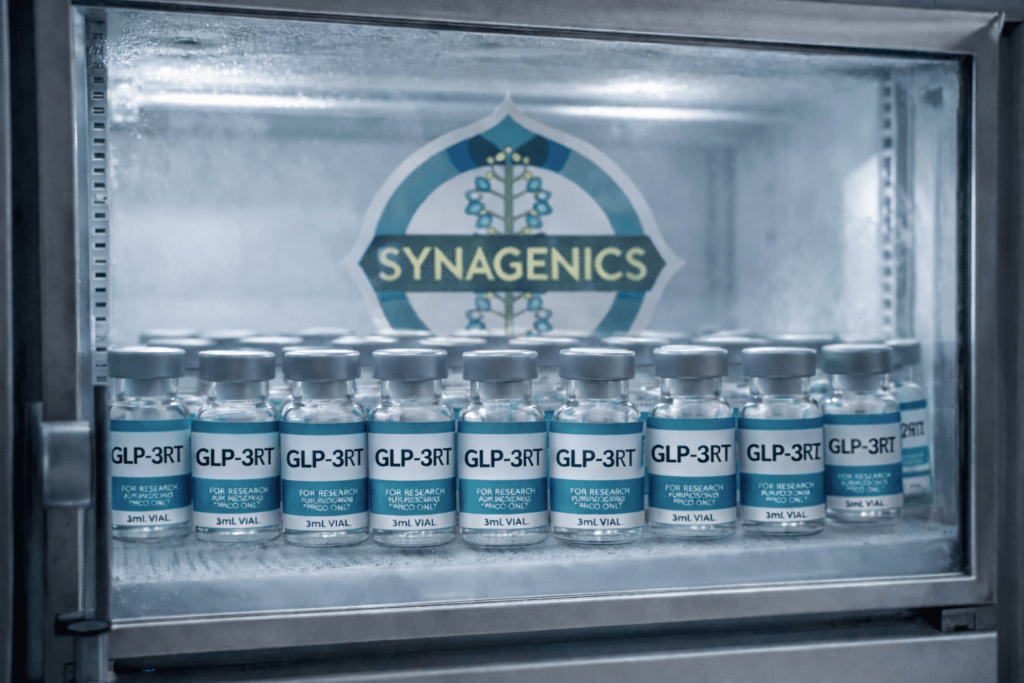
Controlled cold storage conditions are commonly used in laboratory peptide preservation. Additionally, minimizing repeated temperature cycling reduces the risk of structural degradation.
Important general laboratory practices include:
- Storing lyophilized peptide in sealed containers
- Protecting from direct light exposure
- Avoiding unnecessary freeze-thaw cycles
These principles support reproducibility in experimental design.
Reconstitution & Solution Stability
Once reconstituted in laboratory solvents, peptides may become more susceptible to degradation mechanisms compared to lyophilized form.
Factors influencing solution stability include:
- Solvent composition
- pH environment
- Ionic strength
- Storage duration
- Exposure to agitation
High-level preparation considerations are available through the Synagenics reference calculator:
Peptide Reconstitution Calculator:
https://synagenics.com/reconstitution-calculator/
Accurate laboratory calculations and consistent technique help minimize variability in receptor signaling experiments.
Structural Integrity & Analytical Verification
SYN-3R stability assessment involves analytical verification to confirm molecular identity and purity before and after storage.
Common laboratory methods include:
- High-Performance Liquid Chromatography (HPLC)
- Mass Spectrometry (MS)
- Purity percentage analysis
- Batch-level documentation
HPLC helps detect degradation fragments or impurity peaks. Mass spectrometry confirms molecular weight alignment with theoretical calculations.
Quality verification ensures that experimental signaling observations reflect authentic peptide characteristics.
Relationship Between Stability & Receptor Signaling
Structural integrity directly influences receptor signaling reliability. Degraded peptide material may:
- Alter receptor-binding affinity
- Modify activation kinetics
- Reduce signaling amplitude
- Affect assay reproducibility
For deeper discussion of receptor activation mechanisms:
SYN-3R Receptor Signaling:
https://synagenics.com/syn-3r-receptor-signaling/
SYN-3R Molecular Structure:
https://synagenics.com/syn-3r-molecular-structure/
SYN-3R Overview:
https://synagenics.com/syn-3r-research-peptide/
By integrating stability management with signaling analysis, researchers strengthen experimental reliability.
Comparative Stability Within GLP Peptide Research
GLP-family peptides may vary in stability depending on sequence design and engineered modifications.
Comparative analysis between SYN-3R and related constructs such as:
SYN-2T Research Peptide:
https://synagenics.com/shop/SYN-2T-tirz/
may evaluate:
- Degradation resistance
- Oxidative sensitivity
- Solubility behavior
- Storage resilience
Such comparisons are conducted exclusively within controlled laboratory research frameworks.
Laboratory Handling Best Practices (High Level)
To support SYN-3R stability in research settings:
- Use sterile laboratory-grade solvents
- Employ calibrated measurement equipment
- Minimize exposure to ambient humidity
- Document preparation steps for reproducibility
- Follow internal laboratory SOPs
Consistency across experiments strengthens data reliability and reduces variability introduced by environmental factors.
Frequently Asked Research Questions
What affects SYN-3R stability?
Temperature, moisture, oxidation, and handling conditions influence peptide stability.
Why is SYN-3R supplied lyophilized?
Lyophilization reduces moisture exposure and supports long-term structural preservation.
Can degradation affect receptor signaling assays?
Yes. Structural degradation may influence assay reproducibility in laboratory models.
How is peptide stability verified?
Through analytical techniques such as HPLC and mass spectrometry.
Is this information related to medical use?
No. All content refers strictly to laboratory research applications.
Related Synagenics Resources
SYN-3R Product Page:
https://synagenics.com/shop/syn-3r/
SYN-3R Receptor Signaling:
https://synagenics.com/syn-3r-receptor-signaling/
SYN-3R Molecular Structure:
https://synagenics.com/syn-3r-molecular-structure/
SYN-2T Research Peptide:
https://synagenics.com/shop/SYN-2T-tirz/
Full Research Catalog:
https://synagenics.com/shop/
Synagenics Blog:
https://synagenics.com/blog/
What Is NAD:
https://synagenics.com/what-is-nad/
🔬 SYN-3R Research Library
- SYN-3R Research Hub (Complete Overview)
- SYN-3R Research Peptide Overview
- SYN-3R Molecular Structure & Peptide Engineering
- SYN-3R Receptor Signaling & GPCR Activation
- SYN-3R Stability, Lyophilization & Laboratory Storage
For full research details, mechanism of action, and compound specifications — Read the full SYN-3R research page here.
Compliance Disclaimer
All information provided on this page is intended for laboratory research purposes only. Not medical advice.